DESIGNING FOR THE FUTURE
In working to minimise the multifaceted problems
facing the world as we move ahead in the 21st Century- such as climate
change, pollution, Peak Oil... and in fact Peak Everything- there is a
lot that can be done at community level. This article is aimed at
opening up ideas and discussions and stimulating questions that
hopefully will lead to a better understanding of what the options are
and and to help you discover the areas in which you would like to get
involved.
Community is going to play an enormous role in future
resilience and the sooner we begin to re-establish a deeper connection
to our community, and work together with our neighbours, the better off
we will be.
So... what kinds of communities are
we seeing evolve, what issues are they tackling and how can we all play a
part in creating our future?

TRANSITION TOWNS
The Transition Town movement, which
began as a concept developed by Rob Hopkins and his students in Kinsale
Ireland and then further expanded and put into action in Rob Hopkin's
current hometown of Totnes UK, is now underway in many countries of the
world, with many more communities in the early stages of involvement.
Transition towns work to a plan to
take their community from high impact, high fossil fuel dependency to
ways of operating which have less impact and are not so dependant on
high usage of fossil fuels.
Is your town/area/suburb a "Transition Town"? If so, find out ways that you can get involved.
-
If not, who might you talk to within your community about the possibility of it becoming a Transition Town?
-
How might you be able to drum up community enthusiasm and participation for becoming a Transition Town?
-
What might the transition and energy descent plan look like for your area?
-
What considerations are important for your community?
|
ECO VILLAGES AND INTENTIONAL COMMUNITIES
These are purpose built, or
established, communities which implement environmentally friendly
practices, materials and lifestyles as a major focus of the whole
community. The members work closely as a team to make the community
work. Intentional communities may also have a specific focus which the
members share, such as maybe creative pursuits, natural therapies or
maybe spiritual beliefs.
LOCALISATION
Localisation is a big part of the
Transition Town plan, and important for any community. It is not
practical to continue relying on things to be brought in from great
distances, not sensible for people to live far away from their jobs,
shops, services and family. It makes much more sense for things to be
concentrated within your local community, preferably within walking or
biking distance.
-
What products and services do you utilise in your local community?
-
What could you access locally that you usually source from further afield?
-
What do you have to leave your community to obtain?
|
An interesting exercise is to trace the path of your
food- and other items if you wish- from where it is produced to your
home. Where does it originate? How does it travel to your location...
and how far is this? What other resources might be used it getting it
from "there to here"... such as maybe refrigeration?
Can you find ways to change your eating and other consumption habits, to use food etc which can be sourced closer to your home?
Can you find local farmers or
growers whom you could buy from direct? What about neighbours with
backyard chickens or veggie gardens- do they have excess for sale, or
maybe a swap?
Approach your local supermarket or other shop about getting in more locally grown and produced food.
What about setting up a barter or
other exchange system for your local community? They might be
especially useful for skill-sharing projects.

IMPORTANT COMMUNITY CONSIDERATIONS
Every community has certain
requirements- some are much the same from community to community, while
some are more specific to an individual community.
What kind of needs does your
community have and how could they be provided more locally, and using
"greener" means? How can your community become prepared for these
changing times?
Some of the things you might consider are:
-
Health and wellness care specific to your communities needs? Elder care?
-
Food- what could be made or grown locally? Community Gardens? CSA's,
swaps and markets? Encourage households to grow food? Council land
that could be utilised for food growing? Fruiting street trees?
Preserving and storing food?
-
Localised employment possibilities to save on
commute time? Making use of local people for things such as garden
maintenance, cleaning, childcare etc.
-
Transport- does your community need to campaign for better public
transport? A community bus? Car pools and car shares? Transport for
elderly members?
-
Water- How about rain harvesting? Households
encouraged to have rain water tanks? Water saving plans for public
parks and sporting facilities etc.
-
Waste- can better use be made of storm water or grey water? Can a lower impact sewage treatment/disposal system be implemented?
-
Energy- generation of solar and wind power on public buildings? Households encourages to have solar panels?

-
Housing- "green" requirements for new houses?
Retrofitting encouragement for existing homes? Use of vegetation to
help control climate?
-
Workshops and classes held on all kinds of relevant
topics, such as permaculture, organic gardening, retrofitting houses,
reskilling etc.
-
Emergency preparedness-
emergency plans for potential disasters for your area? Advice on
emergency supplies for households in case of extended power outage or
interruption to food supply? Plans for community security and safety in
the event of a disaster or other occurrence?
|
Do some research into what skills and knowledge your
local community members possess. There may be untapped, or
under-utilised talents right at your doorstep!
What is missing?? Can you recruit people to your area to fill those gaps?
COMMUNITY BASED PROJECTS
Great savings in all kinds of ways
can be made when communities work together on joint projects, or share
resources. This is also a wonderful tool in building community spirit.
Here are some community projects
which have been successful in many areas- maybe you will be able to
implement some of them in your community:
-
Tool Libraries- a collection
of tools and equipment, usually both donated and bought from borrowing
or membership fees, available for loan or hire to members. This could
also be done on an unofficial basis, by neighbours sharing what they
have, rather than everyone owning a lawnmower, for instance. Neighbours
may also decide to go in together on a group owned item. Of course,
some general rules need to be agreed to between the parties, to make
things as conflict free as possible.
-
Toy Libraries- similar principle to above. Allows
parents to borrow new toys for their children to enjoy, especially as
children outgrow certain interests, or would just like a change. Many
book libraries also have toy libraries.
-
Community Garden- Either run on a plot per household
basis, or everyone works in together on whole garden and divides up the
harvest. Once again, clear guidelines are needed.
-
Community produce swaps and markets.
-
Trash and treasure type swaps/markets.
-
Local currency- a currency
which is only usable locally, at the places which have agreed to honour
it. This has worked successfully in several locations, but is certainly
something which needs proper research before implementation. The LETS
scheme is a variation on this kind of system.
|

RE-SKILLING
To thrive in coming times,
communities are going to require a resurgence of older skills, which are
now much rarer and, in some cases, almost lost. Many things which we
now rely on machines to do will need to be done, once again, by hand or
by machines which don't require fossil fuels.
Skills which may be worth learning, brushing up on or locating people who know them:
-
Sewing and knitting
-
Gardening- organically, or permaculture, especially with regard to food plants
-
Preserving and storing food
-
Home cooking from scratch
-
Medicinal herbs and bush foods/medicinal plants
-
General first aid
-
Woodworking, basket weaving
-
Using hand tools
-
Repairs, knife sharpening, wood chopping
-
Building and retrofitting
-
Blacksmithing
|
Choose one, or more, and start learning!
HONOURING ELDERS AND INDIGENOUS KNOWLEDGE
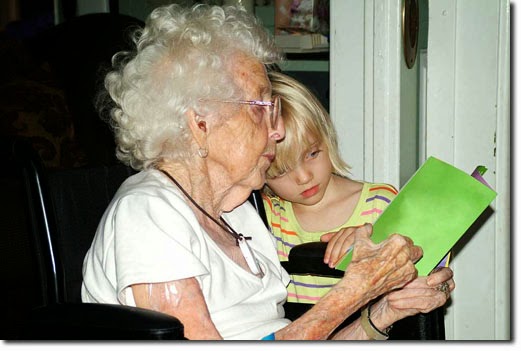
One of the great resources we should
be turning to, and honoring, are our elderly people who have lived
through times using the skills and principles we are needing to
re-learn. Before it's too late, take the time to talk with older
relatives and friends, or see if you can visit an aged facility, and
really listen to what these people can tell you about thrift and making
do and using less and ways to do things that don't require fancy
machines or plastic galore. They won't be around forever, and when they
go, their skills, knowledge and wisdom may go with them... unless we
keep it alive.
Our indigenous people, especially
the older people, also have so much to offer in understanding our
relationship with the land and how we can better work in harmony with
it. They also have knowledge of bush foods and medicinal plants, which
are ideally suited to our specific climates, and may be useful in times
of need.
COMMUNITY SPIRIT AND ENGAGEMENT
As much as possible, try to engage
as many members of the community as possible in discussions and
decisions about how your community might proceed, and allow people,
where possible, to get to work on those areas for which they have
enthusiasm. When people feel "ownership" of ideas... feel that they
have a say and can act on their own ideas... things that they feel
strongly about and have a passion for, they quickly build momentum and
can achieve great things!
Community building events such as
pot luck dinners, BBQ's, community produced entertainment, working bees,
workshops etc help people to feel more a part of their community and
more willing to take part in things more enthusiastically.
It is important to create
connection, to re-create the village mind, and celebrate all that each
person has to offer. All the skills, ingenuity and creativity that come
together to make something truly wonderful happen. Together, we can
achieve much more than the sum total of our individuals, we can become
resilient and meet the future and what may come with a joy and
positivity... knowing that we are not alone.