Showing posts with label nature. Show all posts

Saturday, 28 February 2015

The Country Diary of an Edwardian Lady


ISBN: 1846660149

"To sit on rocks; to muse o'er flood and fell;
To slowly trace the forest's shady scene;
Where things that own not man's dominion dwell;
And mortal foot hath ne'er or rarely been!
To climb the trackless mountain all unseen;
With the wild flock, that never need a fold;
Alone o'er steeps and foaming falls to lean;
This is not solitude: 'tis but to hold
Converse with Nature's charms, and view her stores unrolled."

  Byron.


And so we are introduced to the wonderful Centenary re-issue of The Country Diary of an Edwardian Lady, aptly preparing us for what is to follow.

Author Edith Holden was born in Kings Norton, Worcester, England in 1871. But it was in the small village of Olton in Warwickshire that she wrote and illustrated her famous diary in 1906. Reflected in her exquisite paintings, Edith Holden's love and perception of nature is obvious. It is a wonderful record of the diversity of the English countryside in the early 20th century, through her eyes.


The exquisite beauty of her paintings touches your soul, with wonderfully blended colour and minute attention to detail.  Her favourite poems are included, to enhance the theme or mood of the illustrations. Her diary entries are fascinating insights into the changing delights of nature brought forth by each season.


Handwritten in Edith's beautiful copperplate handwriting, the text adds to the authentic feel of this book and the era in which it was penned.
This volume would be a wonderful addition to the library of any lover of historical naturalist artwork- or of the abundance of nature itself!


Old Wilpena Station, Flinders Ranges


In northern South Australia is a remarkable, spectacular National Park called the Flinders Ranges National Park.  One of the most historically fascinating places in the Park is the Old Wilpena Station which was still a working station within until the mid 1980's.

Situated not far from the towering mountains of the Pound itself, and within walking distance from the Resort and caravan park, this area is one of the more lushly vegetated areas of the Park.

But its real charm lies in the relics of past lives and farming in the region.  One of the unique aspects of the station is that the buildings are in excellent condition, due in part to the excellent caretaking of its past by the last residents, the Hunt family.

Rather than just demolish old buildings as was done on a lot of country properties, or allowing them to fall into ruin, they kept restoring them as needed and using them as station outbuildings, over the years. 


Book-Keepers Cottage

There are also many old items and fittings still present which give a unique insight into the workings and life on an outback property.  These include lots of old farm machinery,
blacksmiths bellows, tools and made items, hanging 'mouse proof' shelves in the old store and a fascinating herringbone pattern wooden floor and sack ceiling in the book-keepers cottage.
 Mouse-proof Shelves in the Store.

Food and other stores for the shepherds and other station workers were kept here and doled out in set amounts.


The Store Building.


Blacksmiths Workshop


Inside the Smithy
Old tools and items made by the blacksmiths still in situ.


Blacksmith's Cottage

More recently, as the station precinct reverted to National Park, mush renovation has been done on the main Homestead and it is now the Park Headquarters/ ranger station.  

The outbuildings and other historical features have also had some restoration at various times.

Visitors to the Park are fortunate in that they can stroll through the Homestead gardens and outbuildings, amongst towering gum trees and the Wilpena Creek nearby.

Emus, kangaroos and various birds are bound to be seen abundantly in the area.


The Homestead and Garden

The gardens are based on "Old English" style gardens, with a number of rose bushes, irises, violets, bulbs and a fruit tree orchard.

The Friends of the Flinders Ranges group maintain the garden, as well as help with various restoration and maintenance issues in the precinct. 


A replica of the old swing used by the hunt girls as children has been lovingly created by one of the Friends founding members, Athol Jackson.  In a corner near the gate grid is a special little spot... the Pet Cemetery where their beloved cats and dogs are buried, with their own cement monument 'stones'.

Behind the outbuildings is also a small people cemetery where a couple of people who worked at the station are buried.  


A 'meat safe' building lies behind the house, as do chicken coops.  There's even a more recent addition of a compost heap - courtesy of the Friends.


'Friends' compost heap used for garden green waste, returned to the garden as rich compost.

Some distance from the main homestead area is the old shearers quarters and shearing shed.


The Old Wilpena Station is a good reminder of the simpler more basic ways in which people lived in years gone by.  Lives dictated by the seasons and their environment... a harsh unforgiving environment at times.

They grew/produced a lot of their own food, water was taken from the spring, windmills pumped water to the stock and a wind power generator was situated on the top of a nearby hill with power lines running down to the house.

Water is still used from the spring to provide water to the Wilpena Resort and Homestead areas and a large solar power array has provides a portion of the power for both for many years... even before solar became popular in suburban areas- as well as a more recent smaller solar array providing power to the Oraparinna ranger station further north and one at Rawnsley Park station, as the power source for their wonderful Eco Villas. 

Solar Array - Green Power
Solar Array at Rawnsley Park station.


Windmills are still dotted through the area, and on neighbouring stations.


Rawnsley Bluff
Windmill on Neighbouring Rawnsley Park station.

Reminding us of others who lived simple lives, even more in harmony with the land, is 'Ikara'... the meeting place in Adnyamathanha, the local indigenous tribe of the region... which is a fascinating monument in honour of the traditional owners of the Flinders Ranges.


The 'Ikara" Monument at Old Wilpena station precinct.

There's an almost spiritual beauty about this place... towering mountains, ancient red gums, eagles soaring overhead, days ended with spectacular sunsets.

A visit here will give you a new appreciation for the brave hardy families who made their homes in this wild location. 

Tickets of entry are available in the Wilpena Information Centre, near the campground.  


Not to be missed if you are visiting the area!


Flinders Ranges Sunset


How to Create An Energy Efficient Home

HOW TO MAKE YOUR HOME MORE ENERGY EFFICIENT

Some of your choices will depend on the type of climate in which you live.

Do you need to lessen or enhance the sun's impact?

Do you need to ensure the option to do both, as you experience cold winters, but also hot summers?
Energy efficiency in different climates.

  • If building an energy efficient new house, research and plan to position your house in the most appropriate position. Consider the positioning of large expanses of windows. Also, take into account other nearby structures and vegetation - will they help protect or obstruct your home? Is there likely to be any other construction in the near future which will affect you?
  • Choose double glazed windows to cut down on heat/cool transfer with the outside.
  • Dress windows with thick curtains, which can be drawn back to reveal light netting curtains, so that you are suited for any occasion.
  • Install an enclosed top pelmet above your windows.
  • Outdoor blinds and awnings will help keep out summer sun.
  • Install well fitting doors, and create areas which can be closed off, so that you can run heating or cooling only in the areas you are currently using. Put *door snakes* at the bottom of doors to stop air leakage.
  • Plant trees, creepers or shade cloth pergolas to help cut down the sun. If you wish to allow winter sun, choose a deciduous tree, or removable shade cloth.
  • Install insulation in your ceiling and walls if possible- plus even floor insulation may be possible.
  • Also, insulate your air conditioning ducts and hot water pipes.
  • Research the cheapest and most energy efficient forms of heating and cooling for your climate and situation.
  • Install energy efficient appliances.


    energy efficient new house

10 More Energy Saving Tips for your Home 


  • Install energy efficient lighting.
  • Have lighting where you need it, so you don't have to run brighter lights or more lights to get light to where you want it.
  • Install water saving shower heads.
  • Only operate appliances such as dishwashers and washing machines with a full load, or choose a low water setting. Wash clothes in cold water where possible.
  • Install rainwater tanks.
  • Install a grey water system.
  • Plant drought tolerant plants and lawns- if you must have a lawn.
  • Mulch plants well.
  • Create directed run off from paved areas into your garden.
  • Hydronic heating and cooling throughout your home.

Planning for an energy efficient home.Putting some serious thought and planning into the energy efficiency of your home will have ongoing benefits to you in terms of comfort and expenditure... and give a lasting legacy to the environment.


With the growing rise in energy costs, as well as the environmental impact of greenhouse gases and over-use of our natural resources, it makes sense to make your home as energy efficient as possible.

Whether you are building a new house, or taking steps to *green* your current home, there's lots you can do!


Sustainable & Resilient Communities

DESIGNING FOR THE FUTURE

In working to minimise the multifaceted problems facing the world as we move ahead in the 21st Century- such as climate change, pollution, Peak Oil... and in fact Peak Everything- there is a lot that can be done at community level. This article is aimed at opening up ideas and discussions and stimulating questions that hopefully will lead to a better understanding of what the options are and and to help you discover the areas in which you would like to get involved.
 

Community is going to play an enormous role in future resilience and the sooner we begin to re-establish a deeper connection to our community, and work together with our neighbours, the better off we will be.

So... what kinds of communities are we seeing evolve, what issues are they tackling and how can we all play a part in creating our future?


TRANSITION TOWNS

The Transition Town movement, which began as a concept developed by Rob Hopkins and his students in Kinsale Ireland and then further expanded and put into action in Rob Hopkin's current hometown of Totnes UK, is now underway in many countries of the world, with many more communities in the early stages of involvement.

Transition towns work to a plan to take their community from high impact, high fossil fuel dependency to ways of operating which have less impact and are not so dependant on high usage of fossil fuels.

Is your town/area/suburb a "Transition Town"? If so, find out ways that you can get involved.

  • If not, who might you talk to within your community about the possibility of it becoming a Transition Town?
  • How might you be able to drum up community enthusiasm and participation for becoming a Transition Town?
  • What might the transition and energy descent plan look like for your area?
  • What considerations are important for your community?


Transition Town Maroondah

ECO VILLAGES AND INTENTIONAL COMMUNITIES

These are purpose built, or established, communities which implement environmentally friendly practices, materials and lifestyles as a major focus of the whole community. The members work closely as a team to make the community work. Intentional communities may also have a specific focus which the members share, such as maybe creative pursuits, natural therapies or maybe spiritual beliefs.


LOCALISATION


Localisation is a big part of the Transition Town plan, and important for any community. It is not practical to continue relying on things to be brought in from great distances, not sensible for people to live far away from their jobs, shops, services and family. It makes much more sense for things to be concentrated within your local community, preferably within walking or biking distance.


  • What products and services do you utilise in your local community?
  • What could you access locally that you usually source from further afield?
  • What do you have to leave your community to obtain?

An interesting exercise is to trace the path of your food- and other items if you wish- from where it is produced to your home. Where does it originate? How does it travel to your location... and how far is this? What other resources might be used it getting it from "there to here"... such as maybe refrigeration?

Can you find ways to change your eating and other consumption habits, to use food etc which can be sourced closer to your home?

Can you find local farmers or growers whom you could buy from direct? What about neighbours with backyard chickens or veggie gardens- do they have excess for sale, or maybe a swap?

Approach your local supermarket or other shop about getting in more locally grown and produced food.

What about setting up a barter or other exchange system for your local community? They might be especially useful for skill-sharing projects.


IMPORTANT COMMUNITY CONSIDERATIONS


Every community has certain requirements- some are much the same from community to community, while some are more specific to an individual community.

What kind of needs does your community have and how could they be provided more locally, and using "greener" means? How can your community become prepared for these changing times?

Some of the things you might consider are:

  • Health and wellness care specific to your communities needs? Elder care?
  • Food- what could be made or grown locally? Community Gardens? CSA's, swaps and markets? Encourage households to grow food? Council land that could be utilised for food growing? Fruiting street trees? Preserving and storing food?
  • Localised employment possibilities to save on commute time? Making use of local people for things such as garden maintenance, cleaning, childcare etc.
  • Transport- does your community need to campaign for better public transport? A community bus? Car pools and car shares? Transport for elderly members?
  • Water- How about rain harvesting? Households encouraged to have rain water tanks? Water saving plans for public parks and sporting facilities etc.
  • Waste- can better use be made of storm water or grey water? Can a lower impact sewage treatment/disposal system be implemented?
  • Energy- generation of solar and wind power on public buildings? Households encourages to have solar panels?
    Rawnsley Park Solar Panels
  • Housing- "green" requirements for new houses? Retrofitting encouragement for existing homes? Use of vegetation to help control climate?
  • Workshops and classes held on all kinds of relevant topics, such as permaculture, organic gardening, retrofitting houses, reskilling etc.
  • Emergency preparedness- emergency plans for potential disasters for your area? Advice on emergency supplies for households in case of extended power outage or interruption to food supply? Plans for community security and safety in the event of a disaster or other occurrence?


Do some research into what skills and knowledge your local community members possess. There may be untapped, or under-utilised talents right at your doorstep!

What is missing?? Can you recruit people to your area to fill those gaps?


COMMUNITY BASED PROJECTS


Great savings in all kinds of ways can be made when communities work together on joint projects, or share resources. This is also a wonderful tool in building community spirit.

Here are some community projects which have been successful in many areas- maybe you will be able to implement some of them in your community:

  • Tool Libraries- a collection of tools and equipment, usually both donated and bought from borrowing or membership fees, available for loan or hire to members. This could also be done on an unofficial basis, by neighbours sharing what they have, rather than everyone owning a lawnmower, for instance. Neighbours may also decide to go in together on a group owned item. Of course, some general rules need to be agreed to between the parties, to make things as conflict free as possible.
  • Toy Libraries- similar principle to above. Allows parents to borrow new toys for their children to enjoy, especially as children outgrow certain interests, or would just like a change. Many book libraries also have toy libraries.
  • Community Garden- Either run on a plot per household basis, or everyone works in together on whole garden and divides up the harvest. Once again, clear guidelines are needed.
  • Community produce swaps and markets.
  • Trash and treasure type swaps/markets.
  • Local currency- a currency which is only usable locally, at the places which have agreed to honour it. This has worked successfully in several locations, but is certainly something which needs proper research before implementation. The LETS scheme is a variation on this kind of system.


Fern Avenue Community Garden

RE-SKILLING

To thrive in coming times, communities are going to require a resurgence of older skills, which are now much rarer and, in some cases, almost lost. Many things which we now rely on machines to do will need to be done, once again, by hand or by machines which don't require fossil fuels.

Skills which may be worth learning, brushing up on or locating people who know them:

  • Sewing and knitting
  • Gardening- organically, or permaculture, especially with regard to food plants
  • Preserving and storing food
  • Home cooking from scratch
  • Medicinal herbs and bush foods/medicinal plants
  • General first aid
  • Woodworking, basket weaving
  • Using hand tools
  • Repairs, knife sharpening, wood chopping
  • Building and retrofitting
  • Blacksmithing

Choose one, or more, and start learning!


HONOURING ELDERS AND INDIGENOUS KNOWLEDGE


One of the great resources we should be turning to, and honoring, are our elderly people who have lived through times using the skills and principles we are needing to re-learn. Before it's too late, take the time to talk with older relatives and friends, or see if you can visit an aged facility, and really listen to what these people can tell you about thrift and making do and using less and ways to do things that don't require fancy machines or plastic galore. They won't be around forever, and when they go, their skills, knowledge and wisdom may go with them... unless we keep it alive.


Our indigenous people, especially the older people, also have so much to offer in understanding our relationship with the land and how we can better work in harmony with it. They also have knowledge of bush foods and medicinal plants, which are ideally suited to our specific climates, and may be useful in times of need.


COMMUNITY SPIRIT AND ENGAGEMENT


As much as possible, try to engage as many members of the community as possible in discussions and decisions about how your community might proceed, and allow people, where possible, to get to work on those areas for which they have enthusiasm. When people feel "ownership" of ideas... feel that they have a say and can act on their own ideas... things that they feel strongly about and have a passion for, they quickly build momentum and can achieve great things!

Community building events such as pot luck dinners, BBQ's, community produced entertainment, working bees, workshops etc help people to feel more a part of their community and more willing to take part in things more enthusiastically.

It is important to create connection, to re-create the village mind, and celebrate all that each person has to offer. All the skills, ingenuity and creativity that come together to make something truly wonderful happen. Together, we can achieve much more than the sum total of our individuals, we can become resilient and meet the future and what may come with a joy and positivity... knowing that we are not alone.


A Lens on Nature

Photographic Projects Capturing The Wonders of Nature


Nature makes a marvellous photography subject, so here are a few ideas for going out and capturing the natural world with your camera.


Spirit of Endurance

A famous photographer, Harold Cazneaux, once took a photograph of a huge old gum tree in Australia, that had battled on and survived through fires, drought, the coming of white man and no doubt much more. 


He called it “The Spirit of Endurance.”


It won the photographic competition he entered it in and brought him much acclaim.

If you ever get a chance, you can still visit this magnificent gum tree, with a display containing a copy of his photograph and some information.  It is located in the Flinders Ranges, just outside of Wilpena SA. 

It is your task to make a display of photographs showing things in nature which display “The Spirit of Endurance”. Things that have survived against odds… things that are fighting for survival. 

This could be photos of plants that are growing in amazing places… where you wouldn’t think they could grow… or at incredible angles out of cliffs etc.

Maybe photos of insects or animals surviving in harsh or polluted environments.

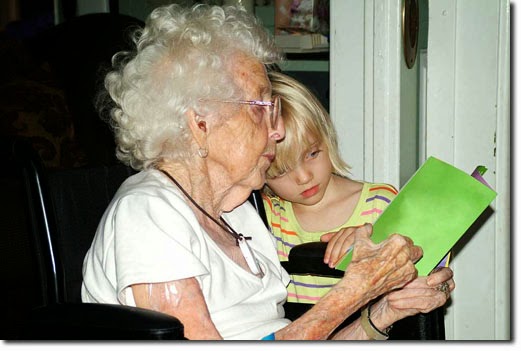
Perhaps photos of very elderly people, or people who have survived through immense trauma or difficulties.

Photograph whatever you can think of to fit the theme.

When you have your photos selected and printed, create your “The Spirit of Endurance” display.

It may be in a scrapbook, a collage of photos on a poster or several individually framed pictures.

You could even display the photos on your computer, using a program such as PowerPoint.

Label each picture with its location and how it gives you the impression of having “The Spirit of Endurance.”


Infinite Diversity

Within one type of thing, there is incredible variety! 

Choose a theme to delve into, and take photos to represent the amazing diversity within the theme. 

Your theme should relate to nature... for example, don’t choose cars.

Your theme should ideally be one thing, or collective things that make up a particular theme.

Some suggestions:

• Trees
• Rocks
• Wetlands or Rivers
• Mountains
• Flowers
• Leaves
• Creature homes
• Webs
• Clouds
• Sunsets
• Moon scenes
• Cats or another specific animal


You can choose to work on more than one theme if you like.

After you have printed your chosen photos, display them.

You may choose to make a poster type collage of pictures, or individually framed photos. Or maybe a display folder or scrapbook.

You could even use a display on your computer, using a program such as PowerPoint.

Label your photos, including location, and some comments on the diversity you have found.


Hidden Beauty 

Things of great beauty can be hidden where they are not immediately obvious. Just like a pearl in an oyster, you can find amazing things under, inside or otherwise obscured from immediate view.  

Your task is to take photos of some of the hidden beauties and wonders you can find.

    Jenolan Caves
  • Photos of things growing in hidden spots, inside logs, in rock crevices etc.
  • Things growing inside something, like a sprout inside its seed.
  • Or a butterfly in its chrysalis… Don’t open! Just the outer view is fine.
    Though if you can also get it emerging later, great!
  • Photograph things under something… like a beautiful beetle or tiny skink.
    Take care when looking under things… Spiders or even snakes could live there!
  • Photos of a fascinating or very pretty rock, hidden under a coating of soil, or crystals hidden on the inside of a plain looking rock.
  • Photos of underground wonders, such as caves.
No doubt you will come up with many other ideas you have for suitable photos.

Once you have printed your chosen photos, create your display.

This might be a scrapbook, poster type collage of photos, or maybe individually framed pictures.

You could even use a display on your computer, using a program such as Microsoft PowerPoint.

Label your photos with location and any relative details.


Sunrise, Sunset

 Sunrises and sunsets are magical! 

Make a series of sunrise photos, and a series of sunset photos. 

Do it each day, if possible, for several days, from the same location.

Display your photos, with information including:

  • Whether it is a sunrise or sunset photo
  •  Time each photo was taken
  • Location of photo
  •  Weather conditions
Record your thoughts on the differences in appearance between sunrises and sunsets. Which do you like best?  Why? 

What effect does the weather have on sunrises and sunsets?

You could also do a photographic record of sunrises and sunsets as above, but using a different location for each.


Natures Magic: A Different Light


Many good photographs use light as an important feature.

Your task is to take a selection of photos of nature, enhanced by light.

You may like to choose one scene and photograph it at different times of day to show the changing light, or on days where the light is different because of sun, clouds, mist etc.

You may like to do a series of sunset or sunrise photos.

You might choose to photograph reflection off water.

Or the sun glinting off water or other shiny surfaces.

This can also be made interesting by the use of a photographic star filter, if you have one.

You may like to do a series of photographs of different coloured light reflecting off the clouds.


Or maybe photos using moonlight.

Or the light from stars “star trails” with time lapse photography.

The possibilities are many.


Once you have printed out your chosen photos, make up your display.

Maybe a scrapbook, a poster type collage of photos, or individually framed photos.

You could even use a display your photos on your computer, using a program such as PowerPoint.

Label your photos with the location, relevant facts such as time of day, weather conditions etc., and what the “feel” of the photo is to you.


Colours of the Earth 

When looking at the Earth you may just think that it is brown… or green if covered with vegetation… but there is actually an immense variety of hues if you look for them. 

Your task is to take photos showing this great variation. 

Find areas where there are different soil colours, or the vegetation gives a different coloured impression. 

You might find colours varying from white sand, pebbles, red earth, yellowish earth, brown or almost black earth, and all kinds in between.  Take photos showing this variety.
  
Plants may give a pale or dark green impression, silvery or white, or blue or olive green and many other shades.

A very mossy area, or bright orange lichen, will colour an area.

If there’s a mass of flowers or coloured leaves they will dominate the scene.  Photograph this amazing kaleidoscope of colour!

Once you have chosen and printed your photos, create your display.

It may be in a scrapbook, a collage of photos on a poster or several individually framed pictures.


You could even display your photos on your computer, using a program such as PowerPoint.


Label your photos with location, the predominate colouring shown and any other details you would like to include.

An idea to add something a bit extra to your display, is to collect a sample of each coloured soil, and to display these with the photos, or even create a frame by gluing the soil onto a card border for each photo.

You could take leaf samples from the vegetation areas (if allowed) and press these, or microwave dry them (this often retains colour better) and use these in your photo display too.


Colour My World 

The world around us is made up of a myriad of different colours and hues, some of them obvious and in-your-face, others more subtle or almost unnoticed amongst stronger colours. 

Choose a colour and create a photographic display to represent it. Get out and about with your camera! Try to get all kinds of variations of the colour, both in different shades and different intensities and textures.

Here's a few simple suggestions to get you started:


GREEN
Leaves, Lichen, Moss, Water, Hills, Enviro Bags, Tree Frogs, Lorikeet


BLUE
Water, Sky, Blue Loo Toilet Cleaner, Budgie, Azurite, Ford Logo, Eyes


RED
Fire Engine, Post Box, Car, Robin, Hibiscus, Holden Blimp, Rose, Traffic Light


ORANGE
Sunset, Fire, Marigold, Monarch Butterfly, An Orange, Glowing Cliffs, Autumn leaves


YELLOW
Sunflower, Duckling, Custard, A Lemon, A Crayon, Daisies, Cheese 


WHITE
Clouds, Shell, Rabbit, Lily, Snow, Rice, Flour, Cottage Cheese


BLACK
Night Sky, Cat, Desk Chair, Licorice,  Leather,  Paint,  T-shirt, Beetle

Be creative and imaginative... use something a bit different, something unexpected.

Make a collage poster, or a PowerPoint presentation, or whatever you feel is the best way to display your work.


You could then try the process again with a different colour. This could even develop into an ongoing project to cover as many colours as possible. Don't be afraid to add photographs to each display if you find something that fits in nicely, at a later stage.