Showing posts with label sharing. Show all posts

Saturday, 28 February 2015

Sustainable & Resilient Communities

DESIGNING FOR THE FUTURE

In working to minimise the multifaceted problems facing the world as we move ahead in the 21st Century- such as climate change, pollution, Peak Oil... and in fact Peak Everything- there is a lot that can be done at community level. This article is aimed at opening up ideas and discussions and stimulating questions that hopefully will lead to a better understanding of what the options are and and to help you discover the areas in which you would like to get involved.
 

Community is going to play an enormous role in future resilience and the sooner we begin to re-establish a deeper connection to our community, and work together with our neighbours, the better off we will be.

So... what kinds of communities are we seeing evolve, what issues are they tackling and how can we all play a part in creating our future?


TRANSITION TOWNS

The Transition Town movement, which began as a concept developed by Rob Hopkins and his students in Kinsale Ireland and then further expanded and put into action in Rob Hopkin's current hometown of Totnes UK, is now underway in many countries of the world, with many more communities in the early stages of involvement.

Transition towns work to a plan to take their community from high impact, high fossil fuel dependency to ways of operating which have less impact and are not so dependant on high usage of fossil fuels.

Is your town/area/suburb a "Transition Town"? If so, find out ways that you can get involved.

  • If not, who might you talk to within your community about the possibility of it becoming a Transition Town?
  • How might you be able to drum up community enthusiasm and participation for becoming a Transition Town?
  • What might the transition and energy descent plan look like for your area?
  • What considerations are important for your community?


Transition Town Maroondah

ECO VILLAGES AND INTENTIONAL COMMUNITIES

These are purpose built, or established, communities which implement environmentally friendly practices, materials and lifestyles as a major focus of the whole community. The members work closely as a team to make the community work. Intentional communities may also have a specific focus which the members share, such as maybe creative pursuits, natural therapies or maybe spiritual beliefs.


LOCALISATION


Localisation is a big part of the Transition Town plan, and important for any community. It is not practical to continue relying on things to be brought in from great distances, not sensible for people to live far away from their jobs, shops, services and family. It makes much more sense for things to be concentrated within your local community, preferably within walking or biking distance.


  • What products and services do you utilise in your local community?
  • What could you access locally that you usually source from further afield?
  • What do you have to leave your community to obtain?

An interesting exercise is to trace the path of your food- and other items if you wish- from where it is produced to your home. Where does it originate? How does it travel to your location... and how far is this? What other resources might be used it getting it from "there to here"... such as maybe refrigeration?

Can you find ways to change your eating and other consumption habits, to use food etc which can be sourced closer to your home?

Can you find local farmers or growers whom you could buy from direct? What about neighbours with backyard chickens or veggie gardens- do they have excess for sale, or maybe a swap?

Approach your local supermarket or other shop about getting in more locally grown and produced food.

What about setting up a barter or other exchange system for your local community? They might be especially useful for skill-sharing projects.


IMPORTANT COMMUNITY CONSIDERATIONS


Every community has certain requirements- some are much the same from community to community, while some are more specific to an individual community.

What kind of needs does your community have and how could they be provided more locally, and using "greener" means? How can your community become prepared for these changing times?

Some of the things you might consider are:

  • Health and wellness care specific to your communities needs? Elder care?
  • Food- what could be made or grown locally? Community Gardens? CSA's, swaps and markets? Encourage households to grow food? Council land that could be utilised for food growing? Fruiting street trees? Preserving and storing food?
  • Localised employment possibilities to save on commute time? Making use of local people for things such as garden maintenance, cleaning, childcare etc.
  • Transport- does your community need to campaign for better public transport? A community bus? Car pools and car shares? Transport for elderly members?
  • Water- How about rain harvesting? Households encouraged to have rain water tanks? Water saving plans for public parks and sporting facilities etc.
  • Waste- can better use be made of storm water or grey water? Can a lower impact sewage treatment/disposal system be implemented?
  • Energy- generation of solar and wind power on public buildings? Households encourages to have solar panels?
    Rawnsley Park Solar Panels
  • Housing- "green" requirements for new houses? Retrofitting encouragement for existing homes? Use of vegetation to help control climate?
  • Workshops and classes held on all kinds of relevant topics, such as permaculture, organic gardening, retrofitting houses, reskilling etc.
  • Emergency preparedness- emergency plans for potential disasters for your area? Advice on emergency supplies for households in case of extended power outage or interruption to food supply? Plans for community security and safety in the event of a disaster or other occurrence?


Do some research into what skills and knowledge your local community members possess. There may be untapped, or under-utilised talents right at your doorstep!

What is missing?? Can you recruit people to your area to fill those gaps?


COMMUNITY BASED PROJECTS


Great savings in all kinds of ways can be made when communities work together on joint projects, or share resources. This is also a wonderful tool in building community spirit.

Here are some community projects which have been successful in many areas- maybe you will be able to implement some of them in your community:

  • Tool Libraries- a collection of tools and equipment, usually both donated and bought from borrowing or membership fees, available for loan or hire to members. This could also be done on an unofficial basis, by neighbours sharing what they have, rather than everyone owning a lawnmower, for instance. Neighbours may also decide to go in together on a group owned item. Of course, some general rules need to be agreed to between the parties, to make things as conflict free as possible.
  • Toy Libraries- similar principle to above. Allows parents to borrow new toys for their children to enjoy, especially as children outgrow certain interests, or would just like a change. Many book libraries also have toy libraries.
  • Community Garden- Either run on a plot per household basis, or everyone works in together on whole garden and divides up the harvest. Once again, clear guidelines are needed.
  • Community produce swaps and markets.
  • Trash and treasure type swaps/markets.
  • Local currency- a currency which is only usable locally, at the places which have agreed to honour it. This has worked successfully in several locations, but is certainly something which needs proper research before implementation. The LETS scheme is a variation on this kind of system.


Fern Avenue Community Garden

RE-SKILLING

To thrive in coming times, communities are going to require a resurgence of older skills, which are now much rarer and, in some cases, almost lost. Many things which we now rely on machines to do will need to be done, once again, by hand or by machines which don't require fossil fuels.

Skills which may be worth learning, brushing up on or locating people who know them:

  • Sewing and knitting
  • Gardening- organically, or permaculture, especially with regard to food plants
  • Preserving and storing food
  • Home cooking from scratch
  • Medicinal herbs and bush foods/medicinal plants
  • General first aid
  • Woodworking, basket weaving
  • Using hand tools
  • Repairs, knife sharpening, wood chopping
  • Building and retrofitting
  • Blacksmithing

Choose one, or more, and start learning!


HONOURING ELDERS AND INDIGENOUS KNOWLEDGE


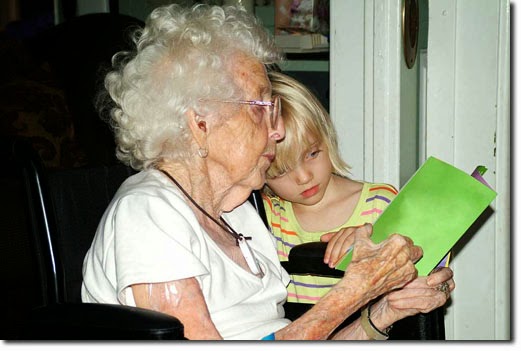
One of the great resources we should be turning to, and honoring, are our elderly people who have lived through times using the skills and principles we are needing to re-learn. Before it's too late, take the time to talk with older relatives and friends, or see if you can visit an aged facility, and really listen to what these people can tell you about thrift and making do and using less and ways to do things that don't require fancy machines or plastic galore. They won't be around forever, and when they go, their skills, knowledge and wisdom may go with them... unless we keep it alive.


Our indigenous people, especially the older people, also have so much to offer in understanding our relationship with the land and how we can better work in harmony with it. They also have knowledge of bush foods and medicinal plants, which are ideally suited to our specific climates, and may be useful in times of need.


COMMUNITY SPIRIT AND ENGAGEMENT


As much as possible, try to engage as many members of the community as possible in discussions and decisions about how your community might proceed, and allow people, where possible, to get to work on those areas for which they have enthusiasm. When people feel "ownership" of ideas... feel that they have a say and can act on their own ideas... things that they feel strongly about and have a passion for, they quickly build momentum and can achieve great things!

Community building events such as pot luck dinners, BBQ's, community produced entertainment, working bees, workshops etc help people to feel more a part of their community and more willing to take part in things more enthusiastically.

It is important to create connection, to re-create the village mind, and celebrate all that each person has to offer. All the skills, ingenuity and creativity that come together to make something truly wonderful happen. Together, we can achieve much more than the sum total of our individuals, we can become resilient and meet the future and what may come with a joy and positivity... knowing that we are not alone.



Sustainable Food for the Future

Food that helps everyone & everything!

One of the most important issues facing the world is creating sustainable food systems for the changing future. We will no longer be able to rely heavily on fossil fuel abundance to grow, transport and store our food, in the way we have been used to.

That doesn't mean we need to starve however. It means we need to get moving on putting in place other options and implement the changes necessary.


GROWING YOUR OWN FOOD

Never underestimate the power of what you can achieve as an individual. Growing at least some of your own food gives you and your family security and resilience, in times of food supply interruption and provides you with healthy, fresh produce. And if everyone grew food, and swapped excesses with friends and neighbours, the whole community would become more self sufficient.

Get started now, while the need is less urgent, so that if the time arises that you need that food, you have ironed out the bugs and can grow successfully.

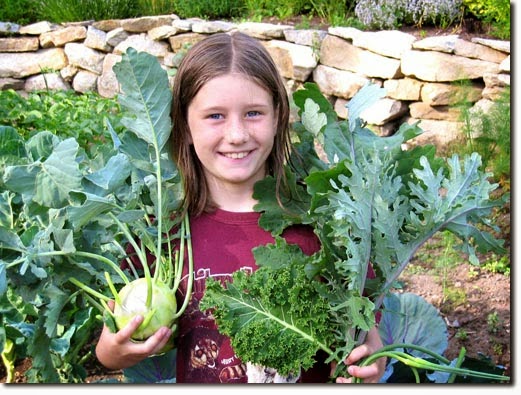
Growing food is also a wonderful activity for children to be a part of. It provides exercise, sunshine, a bond with the earth, an understanding of cycles and seasons and uplifts your mood. It also makes some special family times and memories... not to mention the delight a child will experience eating the first ripe tomato of the season, or snapping open fresh peas, straight from the plant!


HOME PRODUCE AND COOKING


Learning, and teaching your children, how to cook wholesome, home made meals from scratch, using wholefoods and produce straight from your garden, is a great skill that will set a healthy pattern for their lives. Experiment... cook over a fire, use a wood oven, try a solar oven. Who knows when these skills may be needed.

If you eat butter and cheeses, Why not learn to make your own? What about your own bread... and don't cheat and use the bread machine. Make your own stocks, your own croutons, your own yummy cookies. See how many things that you usually buy pre-made that you can make yourselves.


STORING AND PRESERVING FOODS

Learning how to properly store different foods- from dry goods to fruits and vegetables- will save a lot of wastage and you will be able to make use of a lot more of your abundant crops or bulk purchases for a longer time period. Keeping out pests is an important aspect, as is correct temperature and humidity. Setting up a good pantry or root cellar record list is a great idea, as well as a rotational schedule to make sure you use the oldest items before the newly added ones.

If you have an excess of harvest, why not try learning how to preserve it for later use? The more ways of preservation you can put into practise, the greater variety of preserved food you will be able to produce.


Try some of these:

  • Freezing- a common way of preserving, but works better when you actually know what you are doing and follow some simple principles.
  • Drying- you can buy special food dryers, or make your own sun dryer.
  • Smoking, salting, glacĂ©.
  • Making jam- used to be very common, but less so in the age of convenience.
  • Bottling/preserving and pickling

HEALTHY DIETS FOR YOU... AND THE PLANET!


Animal products have the greatest environmental impact, in a host of ways, and therefore are not environmentally friendly at all. Many would say they are not good for your health either. Cutting down, or eliminating, meat and other animal products, is a great way of helping cut down greenhouse gases and the massive destruction to the environment brought about especially by factory farming, along with mass clearing land for grazing animals and growing livestock feed..

So, what are healthy diets? The closer you eat to how a food comes naturally (in most cases) the healthier that food should be. So, wholefoods, not processed. If it has an ingredient list... it's probably not very healthy (with certain exceptions of course.)

Vegan, or if you don't feel you can go that far, vegetarian. If you feel you can't give up meat, eggs or dairy make sure it is truly free range organic- not full of chemicals, toxins, hormones and antibiotics.

Eat lots of fresh, organic raw fruits and vegetables. Straight from the plant if you grow your own! You don't want to be eating something that has sat in storage for months, been artificially ripened with gas, or travelled hundreds or thousands of kilometres by the time it reaches you. How many vibrant nutrients do you think it still has after all that?


PROBLEMS WITH CURRENT FOOD PRODUCTION SYSTEM


Unfortunately, much of our current agriculture and food production is geared towards making as much money, for as little expenditure as possible- with seemingly little consideration for the "product" (animals or plants) or the humans that end up eating them.

Some problems are:

  • Production of enormous amounts of greenhouse gases, and other pollutant, along the entire chain of production.
  • Toxic chemicals, hormones, antibiotics etc ending up in both plant and animal foods.
  • Deforestation and land degradation to grow/graze.
  • Oceans being over fished, polluted, fish ingest mercury and other toxins.
  • Huge amounts of fossil fuel used for transport of food over long distances.
  • Huge monopolies taking over, and having ultimate control of, certain industries.
  • Government subsidies for certain industries.
  • Health impact studies sponsored by the industry the studies are testing.
  • Processed foods being stripped of nutrients and dietary value.
  • People becoming ill, obese and dying as a result of their poor diets.
  • Workers rights ignored, and abuse rife, in certain industries.
  • Immense suffering and hardship by the animals raised in factory farms.

COMMUNITY FOOD PRODUCTION


Within a community, much of its food can be produced locally, by individuals or small organic growers. Localisation is going to become increasingly important. Apart from individuals growing their own food, there are other options to obtain good healthy produce.

Community gardens are a wonderful way to get the community motivated, and is important for those who may not have their own land for gardening, such as those living in flats or retirement villages. They also provide social interaction, exercise and sunshine to those who take part.


Share gardens is another option, where people with garden space to spare partner with those willing to do a lot of the work. This is particularly relevant for older people who may have larger gardens, but find a lot of gardening too difficult. They may partner with younger people living in nearby apartments, who have no garden areas they can use.


CSA's (Community Supported Agriculture) is another great idea, as is approaching local farmers yourself to see if you can buy produce direct... or even have the fun of pick-your-own!

Working together, at a local level, we can create food resilience in our community and ensure the availability of enough food and a healthy diet for all.


Fern Avenue Resilient Gardening

Thursday, 26 February 2015

Using Photography as a Learning Tool

Observe... Capture... Create...

Photography can be beneficial in learning in far more ways than just learning to use a camera. In fact, photography activities can be used to enhance any formal subject area, plus can be a valuable personal development tool as well. Viewing things through the lens of a camera gives students (of any age!) the chance to see things from a different perspective. They learn to look more closely at what is around them, to focus on what's actually there, to see things from various angles and develop creativity.


Students also develop good critical judgement and comparative skills as they look at their work and choose photographs that best fit their need. They learn visual balance and pleasing aesthetics in framing their subjects, as well as developing appreciation for colours, shapes, textures and forms. Also may come an awareness of how to create different "feel" to an image, by using different lighting, filters, colour etc.


They often also learn patience, as they wait for the perfect moment when the sun casts the right light... or in trying to capture a bird in flight or a great goal at the footy... or as they work with animals or people in getting the shot they want.


Taking photos is also fun and hands on, not a dry seemingly "boring" way of approaching the world. It can also be challenging, and require some overcoming of obstacles and perseverance- all of which are usually undertaken gladly as the student photographer strives to get "just the right shot" to portray what they are trying to get across to the viewer.
Photography can be very creatively satisfying, and a great confidence booster- especially useful for students who may not excel in sporting type activities, or are not highly academic- as the photographer can take pride and pleasure in what they have achieved, and the appreciation, from others, in their work.


Below are some suggestions for incorporating photography into various learning areas.


    SCIENCE
  • Photography can be a great way to illustrate procedure for various experiments or projects. Students can not only show how they carried out their own work, but create Step-by-Step guides for other students who wish to recreate the experiment.
  • Ask students to find and photograph scientific principles and processes at work, such as- leverage, energy conversion, geological features, or the life cycle of a plant.
  • Nature provides endless possibilities for biological and environmental science illustration.
  • Photography provides an accurate way of recording change over time.

    TECHNOLOGY
  • Plenty of opportunity here for using various computer technology in the form of photo editing software, printers etc.
  • The camera itself is a piece of technology and students can learn about the various technical details, parts, accessories etc and how they work.
  • Have students create photographic displays of various technology related things.


    HISTORY
  • Use for creating historical records, such as buildings, landmarks or monuments.
  • Photographic recreation of a historical event.
  • Using photo editing techniques to give old time look to recent photos of old buildings etc- what shouldn't be in the scene? And what should be that is not?


    ART AND CRAFT
  • Students take photos and then paint, draw, weave, model, sculpt or any other art or craft form to depict the photograph, in whatever style they wish.
  • Reinforce perspective and visual elements through the "eye of the camera".
  • Take photos to represent a piece of music (with or without lyrics), and be played during it to enhance the experience.
  • Take some photos, then write music/song which helps express the images.
  • Have students take photos to use as dramatic inspiration for dance themes and moves.


    MATHS FUN
  • Get students to explore shapes with a camera. Just how many different triangles can they locate?
  • Have young students help you create a number book or poster by taking their own photos of objects to represent each number.
  • Assign students mathematical principles to illustrate... and see how creative they can be!


LANGUAGE
  • Have students take photos of objects to label- either in English (or your native language) or a foreign language.
  • Illustrate stories or poems- either their own or published authors- with photos. How creative can they be in how they portray them?
  • Get students to take a photo, or photos, then write a story or poem inspired by their photos.
  • Create a regular class magazine/newsletter and encourage students to write about school or local events, with photos as illustration.


    PEOPLE AND PLACES
  • Ask students to portray a certain culture or segment of their community through photographs.
  • Get students to report on a significant event or proposal which will affect the community, with photographic illustrations.
  • Create a "time capsule" with student photos of daily life, school life, and other elements that represent the time you live in.


GET ACTIVE
  • Sports photography creates challenges of its own... challenge the students to photographically represent a school game or their favourite sport.
  • Get students to create a step-by-step "how to" of a sport, or a dance routine, or martial arts move etc in photos.
  • Have your students track their own results of an improved diet and exercise plan with progressive photos of themselves. (not necessarily shared with whole class, if some students are sensitive about their appearance.)

These have just been a few ideas to get you started on using photography to teach, enhance, inspire and motivate your students in their learning journey. Come up with some of your own! Maybe even challenge your students to devise some photography learning ideas for themselves.


Seen through the eye of the photographer, the world can take on enchantment anew!


Saturday, 21 February 2015

Neighbourhood Produce Exchange

A Sustainable Living Kid’s Activity

How many people in your area have an enthusiastic lemon tree which produces more than they can use… an abundant grape vine… or a whole garden full of lovingly grown fruits and veggies?  Often excess produce ends up going to waste, but that doesn’t need to be the case.  The sharing of this bounty can be a part of creating greater community in your area, as well as building local food security.

The best way to begin this project is to be growing at least something yourself, which you can offer to share with neighbours.  Maybe you already have some citrus or stone fruit trees in your garden, pots of herbs, or a big healthy rosemary bush.  Or get busy and plant some easy to grow veggies, like tomatoes, herbs or spinach. 

To begin with you could just visit nearby neighbours and offer them some of your produce.  Make it freely available, without expectation of getting anything in return.  If they have something to share, they will no doubt offer you some of it… and they may offer some to another neighbour, who does the same… and so on.


If you want to do this on a more organised scale, have a wander around your neighbourhood and note down any fruit trees or veggies being grown that you can see from the street.

Create a flyer proposing your produce swap idea and pop it in the letterboxes of those houses, or introduce yourselves to the householder and hand the flyer over personally.  You could also put flyers in other letterboxes also, as not all growing produce will be visible from the street.

You may like to hold a weekly, fortnightly or monthly swap day in your front garden or at a local park (check if permission from council is required) where everyone brings along their excess produce to share.


Or you could create a local listing of people with produce to share, which could either be printed and given out, or online somewhere, such as a blog or facebook page. (Be careful with how much information you give out online!)  Then neighbours get in touch and organise sharing between themselves.

Neighbours might also decide to preserve excess food, such as making jam, canning etc, and then share this with others.

You could also check if there’s already a produce exchange happening in your neighbourhood and decide to join forces with that.  Suggest your neighbours join up and all add your produce to local swap meets.


Parents please note: as with any activity involving your children interacting with other people, especially those you don’t really know, it is best if a trusted adult is present, for their safety.

Joe’s Connected Garden

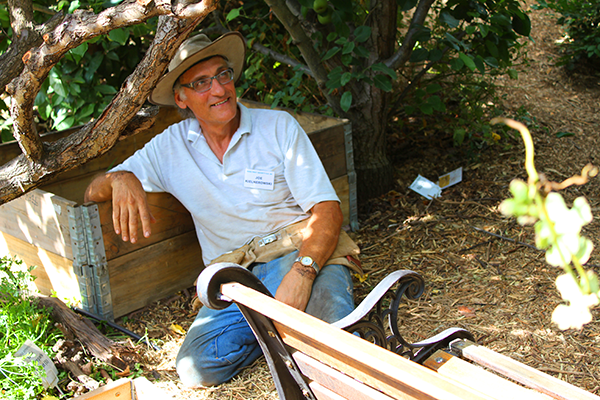
In Argent St, Elizabeth Grove (and the street behind) an unexpected delight lies behind the relatively normal front yard facades of 4 suburban homes, in the form of Joe’s Connected Garden


The garden is actually 3 connected backyards- Joe’s Garden, Rosanne’s Garden and Mary’s Garden- with gates leading from one to another, along with one garden across the road- Irene’s Garden.  


The gardens are planted and cared for by the residents, but a special mention must be made of Rosanne who, despite many health l limitations, puts in an immense amount of time into the daily care of the garden.  And of course Joe, who’s knowledge and obvious ‘green thumbs’ has been a major contributor to the actual planting of the garden and ongoing work.

 
Permaculture organic gardening techniques are utilised in this marvellous ‘private community garden.’  All of the gardens are abundantly growing a huge range of fruits and vegetables, along with some other plants.  Fruit trees abound- the gardens boast over 400 varieties of fruit- including a large number of fig varieties , especially in Irene’s garden.  One fig is the fascinating sandpaper fig, which Joe tells was used by the aboriginal people like sandpaper, to smooth their carved wooden implements and weapons.  There are also lots of citrus, stone fruits, a large pomegranate tree and lots more, and even quite a range of tropical fruits such as bananas, avocados and mangoes, due to the clever creation of micro climates.  

 
Grape vines hang overhead, along with other vines and creepers here and there.  Raised beds containing a mass of lush strawberry plants and all kinds of other edibles are scattered throughout the garden.  A mass of enthusiastic spinach, silver beet and chard take over the ground level of Irene’s Garden seasonally.

In Joe’s Garden an in-ground swimming pool has been turned into a beautiful water garden, which is not only a delight to look at but a storage area for rainwater, available if needed.  Under Joe’s back veranda are a mass of plants in pots, many destined for a spot in the garden when the time is right.

 
Across the road in Irene’s garden is the plant nursery where they grow many varieties of plants from seed, cuttings etc for sale to the public, as a way of helping cover the water bill and other expenses the garden incurs.

Joe’s Connected Garden could not be as lush and successful as it is without the enthusiastic help of many volunteers who put in many hours of work over the year to carry out a myriad of jobs that need doing in such a large area of garden, such as planting, weeding, mulching, pruning and harvesting. One project undertaken was to install bird netting over much of the garden to lessen how much produce was getting lost or damaged.  


 Also, a small army of volunteers put in a lot of hard work to prepare the gardens for events, such as the (soon to be defunct) Open Garden Scheme.  The gardens usually get several hundred fascinated visitors during this event!
 
Helping out in the garden has been a great way for the volunteers to learn more about sustainable home food growing from someone who has so much skill, knowledge and experience-Joe has formal tertiary qualifications in urban permaculture design- as well as the great feeling helping brings and the spirit of community and well-being built through shared interest, good conversation and a connection with the earth and its abundance.  All helpers also get to share in the garden’s bounty, taking home excess produce and sometimes a plant from the nursery.

Although there won’t be any more Open Garden events at the garden, due to the closing of the program, Joe hopes to run other events, such as workshops and guest speakers, so it would be well worth taking the time to visit next time such as event is held, especially if you have an interest in creating your own flourishing organic food garden.  Well done all those involved!