Showing posts with label local. Show all posts

Saturday, 28 February 2015

Sustainable & Resilient Communities

DESIGNING FOR THE FUTURE

In working to minimise the multifaceted problems facing the world as we move ahead in the 21st Century- such as climate change, pollution, Peak Oil... and in fact Peak Everything- there is a lot that can be done at community level. This article is aimed at opening up ideas and discussions and stimulating questions that hopefully will lead to a better understanding of what the options are and and to help you discover the areas in which you would like to get involved.
 

Community is going to play an enormous role in future resilience and the sooner we begin to re-establish a deeper connection to our community, and work together with our neighbours, the better off we will be.

So... what kinds of communities are we seeing evolve, what issues are they tackling and how can we all play a part in creating our future?


TRANSITION TOWNS

The Transition Town movement, which began as a concept developed by Rob Hopkins and his students in Kinsale Ireland and then further expanded and put into action in Rob Hopkin's current hometown of Totnes UK, is now underway in many countries of the world, with many more communities in the early stages of involvement.

Transition towns work to a plan to take their community from high impact, high fossil fuel dependency to ways of operating which have less impact and are not so dependant on high usage of fossil fuels.

Is your town/area/suburb a "Transition Town"? If so, find out ways that you can get involved.

  • If not, who might you talk to within your community about the possibility of it becoming a Transition Town?
  • How might you be able to drum up community enthusiasm and participation for becoming a Transition Town?
  • What might the transition and energy descent plan look like for your area?
  • What considerations are important for your community?


Transition Town Maroondah

ECO VILLAGES AND INTENTIONAL COMMUNITIES

These are purpose built, or established, communities which implement environmentally friendly practices, materials and lifestyles as a major focus of the whole community. The members work closely as a team to make the community work. Intentional communities may also have a specific focus which the members share, such as maybe creative pursuits, natural therapies or maybe spiritual beliefs.


LOCALISATION


Localisation is a big part of the Transition Town plan, and important for any community. It is not practical to continue relying on things to be brought in from great distances, not sensible for people to live far away from their jobs, shops, services and family. It makes much more sense for things to be concentrated within your local community, preferably within walking or biking distance.


  • What products and services do you utilise in your local community?
  • What could you access locally that you usually source from further afield?
  • What do you have to leave your community to obtain?

An interesting exercise is to trace the path of your food- and other items if you wish- from where it is produced to your home. Where does it originate? How does it travel to your location... and how far is this? What other resources might be used it getting it from "there to here"... such as maybe refrigeration?

Can you find ways to change your eating and other consumption habits, to use food etc which can be sourced closer to your home?

Can you find local farmers or growers whom you could buy from direct? What about neighbours with backyard chickens or veggie gardens- do they have excess for sale, or maybe a swap?

Approach your local supermarket or other shop about getting in more locally grown and produced food.

What about setting up a barter or other exchange system for your local community? They might be especially useful for skill-sharing projects.


IMPORTANT COMMUNITY CONSIDERATIONS


Every community has certain requirements- some are much the same from community to community, while some are more specific to an individual community.

What kind of needs does your community have and how could they be provided more locally, and using "greener" means? How can your community become prepared for these changing times?

Some of the things you might consider are:

  • Health and wellness care specific to your communities needs? Elder care?
  • Food- what could be made or grown locally? Community Gardens? CSA's, swaps and markets? Encourage households to grow food? Council land that could be utilised for food growing? Fruiting street trees? Preserving and storing food?
  • Localised employment possibilities to save on commute time? Making use of local people for things such as garden maintenance, cleaning, childcare etc.
  • Transport- does your community need to campaign for better public transport? A community bus? Car pools and car shares? Transport for elderly members?
  • Water- How about rain harvesting? Households encouraged to have rain water tanks? Water saving plans for public parks and sporting facilities etc.
  • Waste- can better use be made of storm water or grey water? Can a lower impact sewage treatment/disposal system be implemented?
  • Energy- generation of solar and wind power on public buildings? Households encourages to have solar panels?
    Rawnsley Park Solar Panels
  • Housing- "green" requirements for new houses? Retrofitting encouragement for existing homes? Use of vegetation to help control climate?
  • Workshops and classes held on all kinds of relevant topics, such as permaculture, organic gardening, retrofitting houses, reskilling etc.
  • Emergency preparedness- emergency plans for potential disasters for your area? Advice on emergency supplies for households in case of extended power outage or interruption to food supply? Plans for community security and safety in the event of a disaster or other occurrence?


Do some research into what skills and knowledge your local community members possess. There may be untapped, or under-utilised talents right at your doorstep!

What is missing?? Can you recruit people to your area to fill those gaps?


COMMUNITY BASED PROJECTS


Great savings in all kinds of ways can be made when communities work together on joint projects, or share resources. This is also a wonderful tool in building community spirit.

Here are some community projects which have been successful in many areas- maybe you will be able to implement some of them in your community:

  • Tool Libraries- a collection of tools and equipment, usually both donated and bought from borrowing or membership fees, available for loan or hire to members. This could also be done on an unofficial basis, by neighbours sharing what they have, rather than everyone owning a lawnmower, for instance. Neighbours may also decide to go in together on a group owned item. Of course, some general rules need to be agreed to between the parties, to make things as conflict free as possible.
  • Toy Libraries- similar principle to above. Allows parents to borrow new toys for their children to enjoy, especially as children outgrow certain interests, or would just like a change. Many book libraries also have toy libraries.
  • Community Garden- Either run on a plot per household basis, or everyone works in together on whole garden and divides up the harvest. Once again, clear guidelines are needed.
  • Community produce swaps and markets.
  • Trash and treasure type swaps/markets.
  • Local currency- a currency which is only usable locally, at the places which have agreed to honour it. This has worked successfully in several locations, but is certainly something which needs proper research before implementation. The LETS scheme is a variation on this kind of system.


Fern Avenue Community Garden

RE-SKILLING

To thrive in coming times, communities are going to require a resurgence of older skills, which are now much rarer and, in some cases, almost lost. Many things which we now rely on machines to do will need to be done, once again, by hand or by machines which don't require fossil fuels.

Skills which may be worth learning, brushing up on or locating people who know them:

  • Sewing and knitting
  • Gardening- organically, or permaculture, especially with regard to food plants
  • Preserving and storing food
  • Home cooking from scratch
  • Medicinal herbs and bush foods/medicinal plants
  • General first aid
  • Woodworking, basket weaving
  • Using hand tools
  • Repairs, knife sharpening, wood chopping
  • Building and retrofitting
  • Blacksmithing

Choose one, or more, and start learning!


HONOURING ELDERS AND INDIGENOUS KNOWLEDGE


One of the great resources we should be turning to, and honoring, are our elderly people who have lived through times using the skills and principles we are needing to re-learn. Before it's too late, take the time to talk with older relatives and friends, or see if you can visit an aged facility, and really listen to what these people can tell you about thrift and making do and using less and ways to do things that don't require fancy machines or plastic galore. They won't be around forever, and when they go, their skills, knowledge and wisdom may go with them... unless we keep it alive.



Our indigenous people, especially the older people, also have so much to offer in understanding our relationship with the land and how we can better work in harmony with it. They also have knowledge of bush foods and medicinal plants, which are ideally suited to our specific climates, and may be useful in times of need.


COMMUNITY SPIRIT AND ENGAGEMENT


As much as possible, try to engage as many members of the community as possible in discussions and decisions about how your community might proceed, and allow people, where possible, to get to work on those areas for which they have enthusiasm. When people feel "ownership" of ideas... feel that they have a say and can act on their own ideas... things that they feel strongly about and have a passion for, they quickly build momentum and can achieve great things!

Community building events such as pot luck dinners, BBQ's, community produced entertainment, working bees, workshops etc help people to feel more a part of their community and more willing to take part in things more enthusiastically.

It is important to create connection, to re-create the village mind, and celebrate all that each person has to offer. All the skills, ingenuity and creativity that come together to make something truly wonderful happen. Together, we can achieve much more than the sum total of our individuals, we can become resilient and meet the future and what may come with a joy and positivity... knowing that we are not alone.



Sustainable Food for the Future

Food that helps everyone & everything!

One of the most important issues facing the world is creating sustainable food systems for the changing future. We will no longer be able to rely heavily on fossil fuel abundance to grow, transport and store our food, in the way we have been used to.

That doesn't mean we need to starve however. It means we need to get moving on putting in place other options and implement the changes necessary.


GROWING YOUR OWN FOOD

Never underestimate the power of what you can achieve as an individual. Growing at least some of your own food gives you and your family security and resilience, in times of food supply interruption and provides you with healthy, fresh produce. And if everyone grew food, and swapped excesses with friends and neighbours, the whole community would become more self sufficient.

Get started now, while the need is less urgent, so that if the time arises that you need that food, you have ironed out the bugs and can grow successfully.

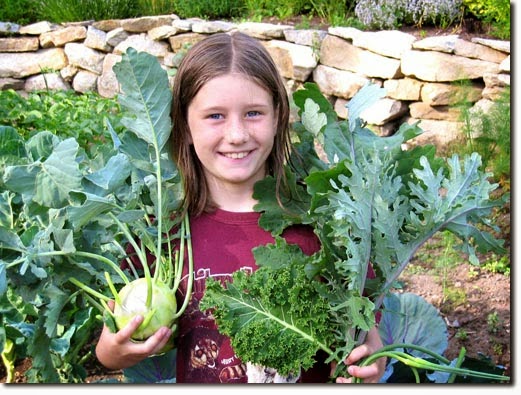
Growing food is also a wonderful activity for children to be a part of. It provides exercise, sunshine, a bond with the earth, an understanding of cycles and seasons and uplifts your mood. It also makes some special family times and memories... not to mention the delight a child will experience eating the first ripe tomato of the season, or snapping open fresh peas, straight from the plant!


HOME PRODUCE AND COOKING


Learning, and teaching your children, how to cook wholesome, home made meals from scratch, using wholefoods and produce straight from your garden, is a great skill that will set a healthy pattern for their lives. Experiment... cook over a fire, use a wood oven, try a solar oven. Who knows when these skills may be needed.

If you eat butter and cheeses, Why not learn to make your own? What about your own bread... and don't cheat and use the bread machine. Make your own stocks, your own croutons, your own yummy cookies. See how many things that you usually buy pre-made that you can make yourselves.


STORING AND PRESERVING FOODS

Learning how to properly store different foods- from dry goods to fruits and vegetables- will save a lot of wastage and you will be able to make use of a lot more of your abundant crops or bulk purchases for a longer time period. Keeping out pests is an important aspect, as is correct temperature and humidity. Setting up a good pantry or root cellar record list is a great idea, as well as a rotational schedule to make sure you use the oldest items before the newly added ones.

If you have an excess of harvest, why not try learning how to preserve it for later use? The more ways of preservation you can put into practise, the greater variety of preserved food you will be able to produce.


Try some of these:

  • Freezing- a common way of preserving, but works better when you actually know what you are doing and follow some simple principles.
  • Drying- you can buy special food dryers, or make your own sun dryer.
  • Smoking, salting, glacĂ©.
  • Making jam- used to be very common, but less so in the age of convenience.
  • Bottling/preserving and pickling

HEALTHY DIETS FOR YOU... AND THE PLANET!


Animal products have the greatest environmental impact, in a host of ways, and therefore are not environmentally friendly at all. Many would say they are not good for your health either. Cutting down, or eliminating, meat and other animal products, is a great way of helping cut down greenhouse gases and the massive destruction to the environment brought about especially by factory farming, along with mass clearing land for grazing animals and growing livestock feed..

So, what are healthy diets? The closer you eat to how a food comes naturally (in most cases) the healthier that food should be. So, wholefoods, not processed. If it has an ingredient list... it's probably not very healthy (with certain exceptions of course.)

Vegan, or if you don't feel you can go that far, vegetarian. If you feel you can't give up meat, eggs or dairy make sure it is truly free range organic- not full of chemicals, toxins, hormones and antibiotics.

Eat lots of fresh, organic raw fruits and vegetables. Straight from the plant if you grow your own! You don't want to be eating something that has sat in storage for months, been artificially ripened with gas, or travelled hundreds or thousands of kilometres by the time it reaches you. How many vibrant nutrients do you think it still has after all that?


PROBLEMS WITH CURRENT FOOD PRODUCTION SYSTEM


Unfortunately, much of our current agriculture and food production is geared towards making as much money, for as little expenditure as possible- with seemingly little consideration for the "product" (animals or plants) or the humans that end up eating them.

Some problems are:

  • Production of enormous amounts of greenhouse gases, and other pollutant, along the entire chain of production.
  • Toxic chemicals, hormones, antibiotics etc ending up in both plant and animal foods.
  • Deforestation and land degradation to grow/graze.
  • Oceans being over fished, polluted, fish ingest mercury and other toxins.
  • Huge amounts of fossil fuel used for transport of food over long distances.
  • Huge monopolies taking over, and having ultimate control of, certain industries.
  • Government subsidies for certain industries.
  • Health impact studies sponsored by the industry the studies are testing.
  • Processed foods being stripped of nutrients and dietary value.
  • People becoming ill, obese and dying as a result of their poor diets.
  • Workers rights ignored, and abuse rife, in certain industries.
  • Immense suffering and hardship by the animals raised in factory farms.

COMMUNITY FOOD PRODUCTION


Within a community, much of its food can be produced locally, by individuals or small organic growers. Localisation is going to become increasingly important. Apart from individuals growing their own food, there are other options to obtain good healthy produce.

Community gardens are a wonderful way to get the community motivated, and is important for those who may not have their own land for gardening, such as those living in flats or retirement villages. They also provide social interaction, exercise and sunshine to those who take part.


Share gardens is another option, where people with garden space to spare partner with those willing to do a lot of the work. This is particularly relevant for older people who may have larger gardens, but find a lot of gardening too difficult. They may partner with younger people living in nearby apartments, who have no garden areas they can use.


CSA's (Community Supported Agriculture) is another great idea, as is approaching local farmers yourself to see if you can buy produce direct... or even have the fun of pick-your-own!

Working together, at a local level, we can create food resilience in our community and ensure the availability of enough food and a healthy diet for all.


Fern Avenue Resilient Gardening

Friday, 27 February 2015

Rainwater Tank Tips, Types & Rebates


Rainwater Tanks - Saving Water and Money


On the driest continent on earth it makes sense to save every drop of water possible, especially in light of recent water use restrictions. 


rainwater tanks australiaIt just makes no sense to waste a perfectly good source of high quality water. A rain water tank can be a wonderful help for your household in dry and drought conditions... or indeed at any time. Clean, fresh drinking water, or supplemental water for your garden or other household needs.

If you are building a new house, in a lot of areas it is now compulsory for domestic rain water tanks to be installed. Rural rainwater tanks are, of course, almost essential for any country property. 
rainwater tanks
Rain water tanks are the optimal way in Australian conditions to harvest rain water and store it for meaningful use.

Rain water tanks can be bought in a large variety of pre-made styles and sizes, or some companies offer made to order tanks.


Slimline rainwater tanks 

These have the advantage of being available in a variety of sleek shape contours and sizes, so that they can fit into small cramped spaces. Perfect if you have little or no backyard, or if a slimline tank would just be the best option for the space you wish to install it.


Modular rain water tank

With similar advantage to slimline models, these come in different sizes, with varying numbers of modules to suit any size space or rainwater needs.


Water Wall 

Narrow, tall wall like rain water tank constructions. Useful for long spaces, with not much depth.


Inground Rainwater Tanks

Installed under ground these tanks are ideal for limited space. They can be placed underneath a driveway or pathway, still allowing for traffic-able use of this area. These tanks can be small, just for short term use, or can also be quite large, if you wish, enabling you to use them as rain water storage tanks.


Rain Water Bladders 

New flexible rainwater storage systems that can be placed under decks or floors making it much more discrete than traditional water tanks. Yard space is also not taken up by this system. 

The bladders are made from puncture resistant PVC material. They can store large amounts of water out of sight under your house or deck, as they are able to capture rainfall from most of the roofed area of your house, rather than just one or two collection points like a traditional rain tank. 

You may install as many bladders as you wish, or have room for. For ease of installation they can also be rolled or folded to fit through small access points.


Rainwater tanks can be made of several different materials:

Poly/Plastic rain water tanks
Light and strong, with a wide variety of sizes and shapes.

Fibreglass rainwater tanks
Also light and reinforced for strength. Many shapes and sizes available.

Concrete rain water tanks
Concrete tanks come in two types - either delivered complete, or poured on site.

Galvanized Steel rain water tanks
These days, most metal tanks are lined with a special liner material. These polyethylene linings prevent corrosion and ensure water quality.


Other points to consider are rain water tank pumps, to pump the water to your house, or other areas, the technicalities of plumbing your rainwater tank both on the collection and use sides, and rain water tank filters to ensure your water is free of debris and impurities. 


You should also ensure that leaf gutter guards are fitted to your gutters, and potential mosquito larvae infestation of your rain water tank is considered.


Recycled Grey Water Tanks 

There are even tanks which can hold and make use of shower and dish washing water etc. Revolutionary greywater treatment systems can enable you to treat your greywater and store it for as long as you like and then recycle it in the garden, use it to flush toilets and even re-use the water in the washing machine.


In most areas rainwater tank cost can be offset by government rainwater tank rebates, so check with your state government.


rain water tanksInformation on RAINWATER TANK REBATE SCHEMES
across Australia:

QUEENSLAND
Brisbane & All QLD: http://www.nrw.qld.gov.au/water/saverscheme/index.html
Beaudesert Shire: http://www.bsc.qld.gov.au/council_information/Waterwise/Waterrebates.asp
Brisbane City Council: http://www.brisbane.qld.gov.au/BCC:BRISWATER::pc=PC_1460
Gold Coast City Council: http://www.goldcoast.qld.gov.au/t_gcw.asp?PID=3992
Ipswich City Council: http://www.ipswichwater.com.au/environment/rebate/latest_news.php
Logan City Council: http://www.logan.qld.gov.au/LCC/residents/water/051209WaterSavingIncentives.htm
Pine Rivers Shire: http://www.prsc.qld.gov.au/c/prsc?a=da&did=1162798&pid=1128140783
Redcliffe City Council: http://www.redcliffe.qld.gov.au/water4.htm#Redcliffe%20Water%20rebates


NEW SOUTH WALES
Sydney: http://www.sydneywater.com.au/SavingWater/InYourGarden/RainwaterTanks/index.cfm


AUSTRALIAN CAPITAL TERRITORY
Canberra: http://www.thinkwater.act.gov.au/tune-ups_rebates/rainwater_tank_rebate.shtml


VICTORIA
Melbourne & All VIC: http://www.ourwater.vic.gov.au/ourwater/dsenowof.nsf/
Northwest VIC: http://www.dse.vic.gov.au/dpi/nrenfa.nsf/LinkView/


SOUTH AUSTRALIA
Adelaide & All SA:http://www.sawater.com.au/SAWater/YourHome/SaveWaterInYourGarden/Rainwater+Tanks.htm


WESTERN AUSTRALIA
Perth & All WA:  http://water.wa.gov.au/portal/page/portal/WiseWaterUse/WaterwiseRebates/


Good luck with finding the best rainwater tank solution for your rain harvesting needs.


Abundant Productive Gardens

TOWARDS SELF SUFFICIENCY
 
Our gardens are a wonderful place to start towards our self sufficiency journey, whether you want to become virtually totally self sufficient, or just provide your family with some healthy home grown produce.


The following article is designed to provide ideas, outlines, and stimulate inquiry for anyone interested in finding out more, or setting up their own productive food producing garden. Of course, these principles are not limited only to producing food, although that is our focus here, and can be applied to whatever type of garden you desire. 


BENEFITS OF GARDENING


  • Working with our gardens allows us to become more aware of the season and natural cycles.
  • Getting hands-on with the soil and living things connects us to the earth in deeper ways.
  • Gardening can be very mentally soothing and replenishing.
  • They joy of seeing things come alive and flourish with our care.
  • Sunshine, fresh air and exercise!
  • Healthy food grown with respect and care.
  • Wonderful hands-on experience for children!


GROWING FOOD


Growing your own food means you know exactly what you put into it... and don't put into it! You create your own healthy soils, fertilise and control pests naturally without toxic chemicals, allow produce to grow in season and ripen naturally, and can eat it fresh... even directly from the plant! You food doesn't end up travelling hundreds of kilometres to your table, spending months in cold storage or ripened unnaturally by gas.

It is probably best to start off with just a few of the easier to grow veggies, when starting out, and then increase as you get the hang of it. 


Some questions to ponder:


  • How Gardening Can Help Create ResilienceWhat veggies will grow easily in your particular climate?
  • What will you actually eat? Or could swap with others for things you want?
  • How much room do you have? some veggies, like pumpkins and melons, require a lot of space, while as others can be grown fairly close together.
  • What was grown in the space previously and how might that affect what you plant there?
  • How else can you use your space, other than just in the ground planting? Do you have vertical areas you can utilise too, to grow things such as vines? What about strawberries and cherry tomatoes in hanging baskets? Window boxes and pots for herbs? Dwarf fruit trees in large pots?


ORGANIC GARDENING


Organic gardening means growing plants using only natural fertilisers such as composted material and the work of worms. It takes advantage of natural pest control methods by planting plants that have natural repellant properties and by attracting beneficial creatures to your garden. Healthy living soil is of utmost importance, as is choosing the right plants and the right place for them.

Some things to consider:


  • What are some of the various forms of organically fertilising your soil?
  • What kinds can you easily access or design for?
  • What pest problems are you most likely to encounter, considering your local area and the types of plants you are growing?
  • How are these best handled?
  • What about home-made natural pest control sprays etc?
  • What beneficial creatures will most help you keep these pests under control and how will you attract them?
  • What about repellant plants?
  • Some of these considerations are discussed in more depth in below sections.


COMPANION PLANTING

Utilising plants which are beneficial to each other in some ways is the principle behind companion planting. And, of course, separating those that are detrimental to each other. Some plants help by releasing substances into the soil that other plants need, or by changing the composition of the soil to be better suited. Some help repel the pests that attack certain plants. yet others provide valuable shade or shelter to young developing plants until they are better able to deal with conditions themselves.


Some plants just don't do well in close proximity to certain others, because of substances released, vigorous competition for nutrients, different water requirements etc.

There is some disagreement as to how useful companion planting actually is, but why not give it a go and see how it works for you.

So...

  • What do you want to grow and which of them should be planted together, or apart, to get the best out of your garden?
  • What else might you add to complement those plants?
  • What other plants might you include in your garden- and where- to help repel pests?


PERMACULTURE

Permaculture is a holistic approach to all human endeavour, including growing food, regeneration, building homes, creating communities, using sustainable methods based on the observation of, and working with, nature.

In our gardens it means creating gardens which mimic the principles of nature, using symbiotic relationships and where there is no waste and everything produced is used somewhere in the cycle in a never ending loop. Plants, living creatures and micro-organisms, and humans are all part of the loop.


Here are some permaculture principles to research further and possibly put into use:


  • Food Forests
  • Guilds
  • Swales and other water harvesting
  • Layering
  • Designing for multiple function
  • Using chickens etc for tilling and pest control


LIVING SOILS

Soil used in most modern agriculture is virtually "dead" soil, because the use of toxic pesticides and fertilisers has basically killed all of the beneficial organisms in the soil. Even much of our garden soil is depleted, or poisoned by toxins, and needs restoration.

A lot can be achieved by adding rich composted material to the soil. This also encourages worms to migrate into your soil, who then carry out their vital work in creating rich soil. Other micro-organisms also may "move in" and you can also buy live micro-organisms to add. Manures also play an important role in adding nutrients to soil, as can "worm castings" and "worm tea" produced in a worm farm. Nitrogen fixing crops can also be grown and left to decompose into the soil, as can any prunings or discarded parts of plants. 


Here's some suggestions to start getting your soil in rich, living condition:


  • Living Soils:  The Key to Abundant Plant GrowthHave your soil tested for nutrient and micro-organism content.
  • What might you need to add to your soil to condition it and encourage beneficial micro-organisms and vibrant growth?
  • What kind of soil do you have? Acid? Alkaline? Clay? Sandy?
  • What do you need to add to improve its pH or composition to better suit what you want to grow and to hold/drain water better?
  • Start a compost heap to be used on your garden.
  • Find a source of organic manure, such as chicken or rabbit. Or get your own rabbits or chickens and use them for manure, along with other uses. Most manures are better composted, as they can be too strong to use directly and also can contain bacteria which requires the heat of the composting procedure to kill it.
  • Start a worm farm (- do some research first!)


COMPOST AND WORMS
Home Made Worm Farms: How to Build Your Own Worm FarmHaving a compost heap is one of the important systems in an organic self sufficient garden. It eliminates a lot of "waste" and returns it to the soil where it once again helps provide valuable nutrients and soil structure. It isn't hard once you get the hang of it, and is usually fairly correctable if things start to go wrong.


Compost Considerations:


  • What kind of compost facility would suit you best? An open heap? A vertical compost bin? A rotary compost barrel? What are the pros and cons of each?
  • How long does each type take to properly break down?
  • What materials are ok to compost... and what is inadvisable?
  • Is your compost getting hot enough and how could you increase its temperature?
  • What do you do if your compost gets too wet... too smelly... too dry?
  • How can you discourage rodents etc from "dining" on your composting materials?


Worm farms take a little more precise care as you are dealing with living creatures, however, with some knowledge and the right conditions, your worms can live contentedly and provide you with an excellent source of fertiliser... as well as munch through a large amount of kitchen waste.


Worm Wonderings:


  • Making a Worm FarmWhat kinds of worm farms are there, and which would suit you best?
  • Where is the best location for a worm farm and what are the ideal conditions?
  • How can you protect your worms from intense heat or cold?
  • How many worms should you obtain and what kind?
  • What is safe to feed your worms?
  • What is toxic or bad for worms... or bad from a use point of view?

ANIMALS AND MANURES


The relationship between animals and the land is an important part of permaculture, and any gardener can benefit from either what they produce (as in manures) or their actions (as in tilling the soil, eating insects, keeping down grass and weeds.)


Chickens and ducks are common choices for gardens. Not only do they carry out valuable garden work, but they can provide you with eggs- if you eat them. Rabbits are also good at eating down grass and provide an ideal manure, which is very gentle. If you have large areas of weeds or grass that need "mowing" you could go for a cow or goat, and get milk too, if you use it.


Of course, keeping animals does require certain considerations:


  • What kind of animal/s will be best suited to your situation?
  • Have you properly researched the pros and cons of having these creatures in your garden... and know when and where they can safely and usefully be let loose in it?
  • Do you actually have the time, energy and facilities to take on these living creatures and provide them with a happy life?
  • Do you have suitable shelter for them from heat and cold, sleeping and laying etc?
  • Can you protect them from predators or excess shock?
  • Can you afford, and are you willing, to pay the various required vet expenses, both for standard care and emergencies?


WATER IN THE GARDEN


Without water, life on earth would cease. The same applies in your garden. Not only is water essential for the very things you are growing, but to attract the beneficial creatures to your garden. Supplying water to these things needs to be thought through properly so as to do it in an efficient, non wasteful manner.


Things to consider about managing water in your garden:


  • Where will your water come from? Mains water? Well or bore? Harvested water in rainwater tanks or rain barrels?
  • What about grey water... could you use this on your non-edible plants or fruit trees?
  • Could you use a reed bed system to cleanse grey water so that it can be used elsewhere?
  • How will you get water to where it is needed? By hose or watering can? Irrigation system... and if so what kind?


  • How much water, how often, do your various plants require?
  • What time of the day will be best to water?
  • How will you handle any water restrictions, now or in the future? Can you put into place principles which will help your garden be more drought tolerant?
  • What about water for birds and other creatures? Will you have bird baths? A pond? Fountain?


ATTRACTING BENEFICIAL INSECTS, BIRDS ETC


Birds, insects, reptiles and all kinds of micro-organism play a very important role in your garden. They help control pests, fertilise flowers, spread seeds, provide manure and condition the soil... not to mention the pleasure they can give to humans as we see them busy about their tasks.


Creature Comforts:


  • What creatures do you want to attract and what will they do for your garden?
  • What kinds of things will help attract them? Specific flowers or plants? Water? Shelter? The presence or absence of some other creature?
  • How will you safeguard these creatures from possible predators such as cats?

  • How will you provide water for them... and can you make it safe so that they can't drown and have easy access/exit?


PLANTS FOR SHADE AND MICRO-CLIMATE


Plants can be used to help with temperature control inside your house as well as outside areas. Deciduous trees are a wonderful way of keeping out the summer heat when they are in leaf, and allowing the sun's rays to warm in winter when they have lost their leaves. Thick plantings of bushes can insulate walls. Creepers and vines can shade pergolas and verandas, or even shade houses and aviaries. Areas of greenery, even ground covers, are much cooler than areas of concrete or paving.

They can also create micro climates in your garden, which then allows for more diversity and more climate sensitive plants to be grown, than a barren, windswept, open to heat and cold area would allow. Shade by trees or well covered ground by low growing plants also helps water retention, by cutting down evaporation.


Ways plants may be helpful in controlling climate at your place:


  • Do you have walls which retain lots of heat in summer?
  • What about large windows which allow lovely warmth through in winter... but bake you in summer?
  • Would some of your outdoor areas benefit from being shaded? Do you want all year round shade, or something that will lose its leaves in winter?
  • Do you have a lot of paved outdoor areas that retain heat and might be better planted with ground covers or turned into other garden areas?


COMMUNITY GARDENS


Community gardens serve important functions within a community. First, they enable people who may not have much, or any, land available for veggie gardens to access land and grow fresh, healthy produce for their families. Secondly, it brings community together and builds a shared goal. Other benefits include increased health from exercise and an improved diet, and from getting out in the fresh air and sunshine, as well as the accompanying mental benefits.


So why not join or start a Community Garden?


Some things to consider:


  • How might you promote and fund raise for your community garden?
  • What kind of model should we use... separate family plots, or an all in together group garden?
  • Who would be eligible to take part?
  • Would there be any kind of fee involved?
  • How would work and produce sharing be organised, if applicable?
  • Where could we access land?
  • What improvements to the soil and general location might be needed?
  • Would we insist on only organic practices and seeds/plants?
  • Fern Avenue Community GardenWhat will we plant?
  • Will we save seed and propagate our own plants?
  • What else will we need- compost heap? Worm farm? Sheds? Picnic facilities?
  • How will we water our garden? Who will water it?
  • What garden tools will we need and how will we obtain them? Where will we store them?